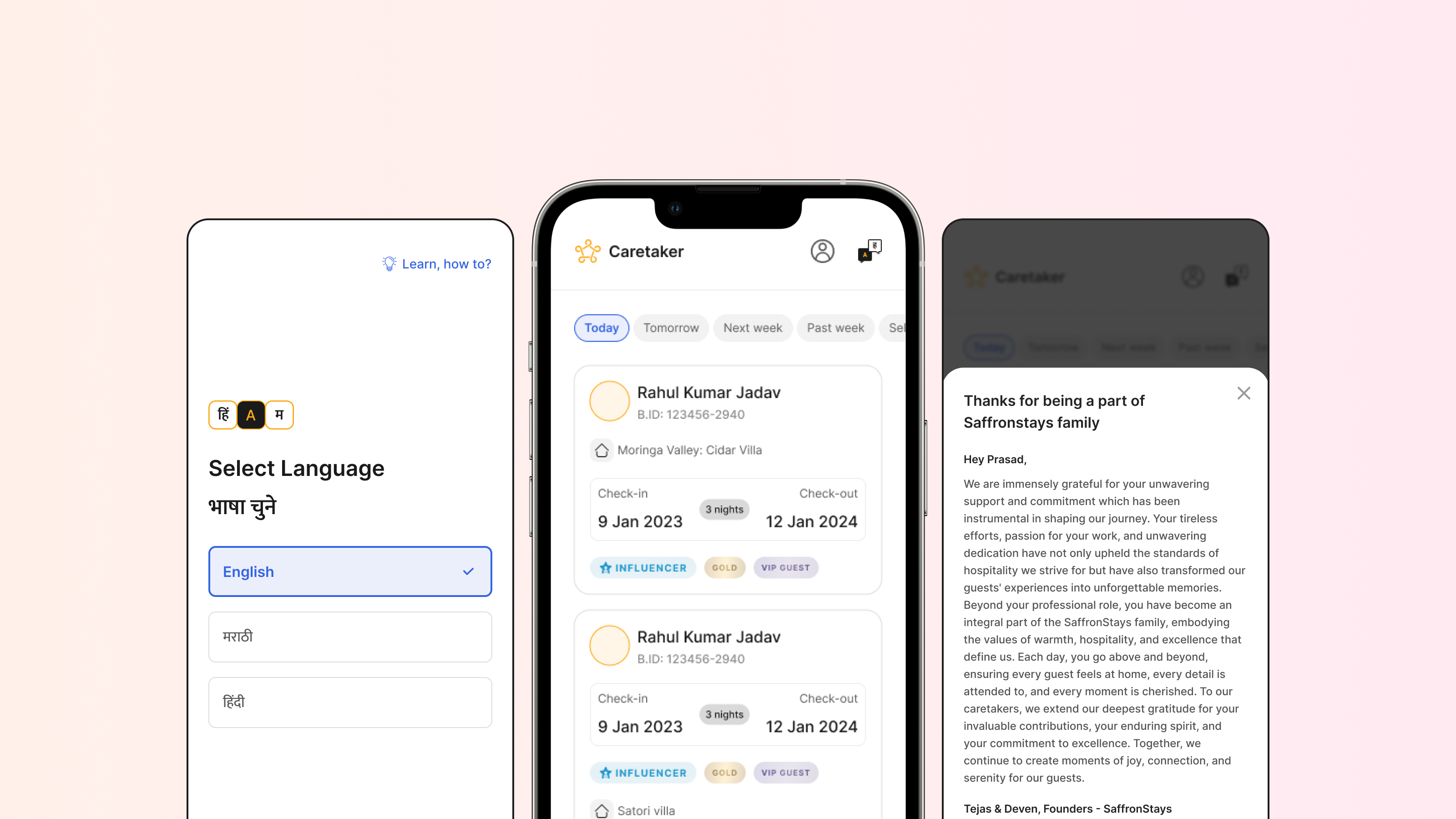
Care Taker App
Back to Work

Background

At SaffronStays, we believe holidays are about togetherness and bonding, in your own private space, away from the crowds — “Family, matlab SaffronStays!”

To deliver on that promise, we needed to empower the people who make it all possible: our Caretakers. From ensuring guest preferences are met, to fulfilling special requests and processing payments — they are the heartbeat of every guest experience.

However, our on-ground teams faced recurring challenges that slowed down operations and, at times, impacted guest satisfaction. That’s when we set out to build the Caretaker App — a tool designed to make their job seamless, fast, and reliable.

User Persona

At SaffronStays, caretakers play a critical role in shaping guest experiences. Caretakers range from nearby villagers to homeowners themselves. But most caretakers come from nearby villages, often with limited exposure to technology.

They faced daily hurdles:

  • Struggling with language barriers
  • Getting lost in complicated user flows
  • Managing check-ins/check-outs in low network conditions
  • These challenges slowed operations and impacted guest satisfaction. We needed to design an app that worked seamlessly for Bharat users — simple, reliable, and multilingual.

Solution

We built the Caretaker App: a mobile-first tool that empowered caretakers to manage bookings, guest preferences, payments, and villa operations — all in one place. The app prioritized clarity, speed, and offline capability, ensuring caretakers could perform tasks without friction.

Design Process

Our approach was rooted in empathy and simplicity. We

  • Conducted in-depth conversations with caretakers and the ops team to understand pain points.
  • Focused on minimal, task-oriented design to reduce cognitive load.
  • Applied UX laws (like the Doherty Threshold) and heuristics to build consistency and trust.
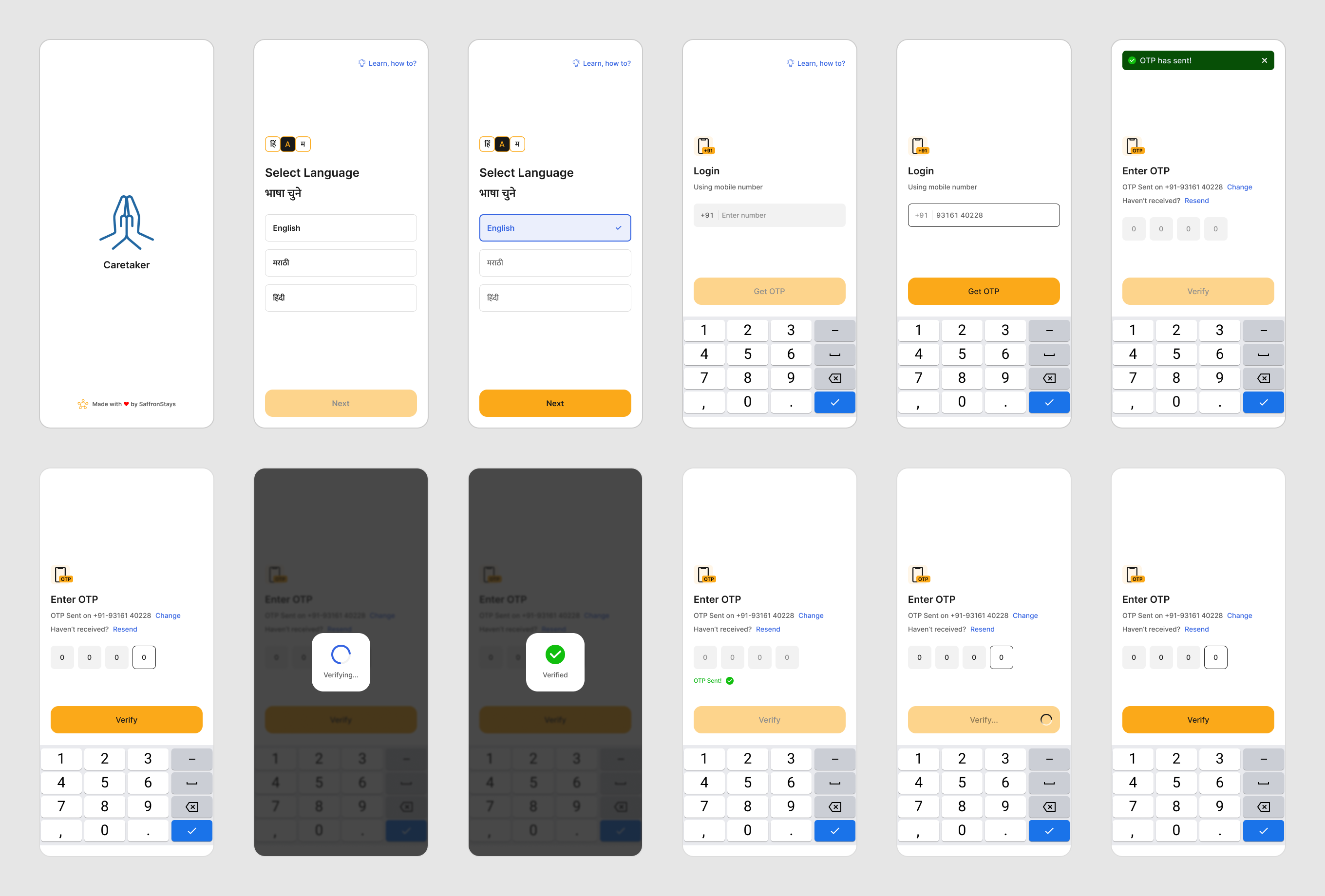
  • Developed an AI-powered in-house translation framework to handle local languages (Hindi, Marathi, English).

Onboarding Flow

  • Feature: Summary of payouts, insights into bookings, and an overview of customer reviews.
  • Design Decision: Adopted a dashboard-style layout with clear visual hierarchies to present key data points at a glance.
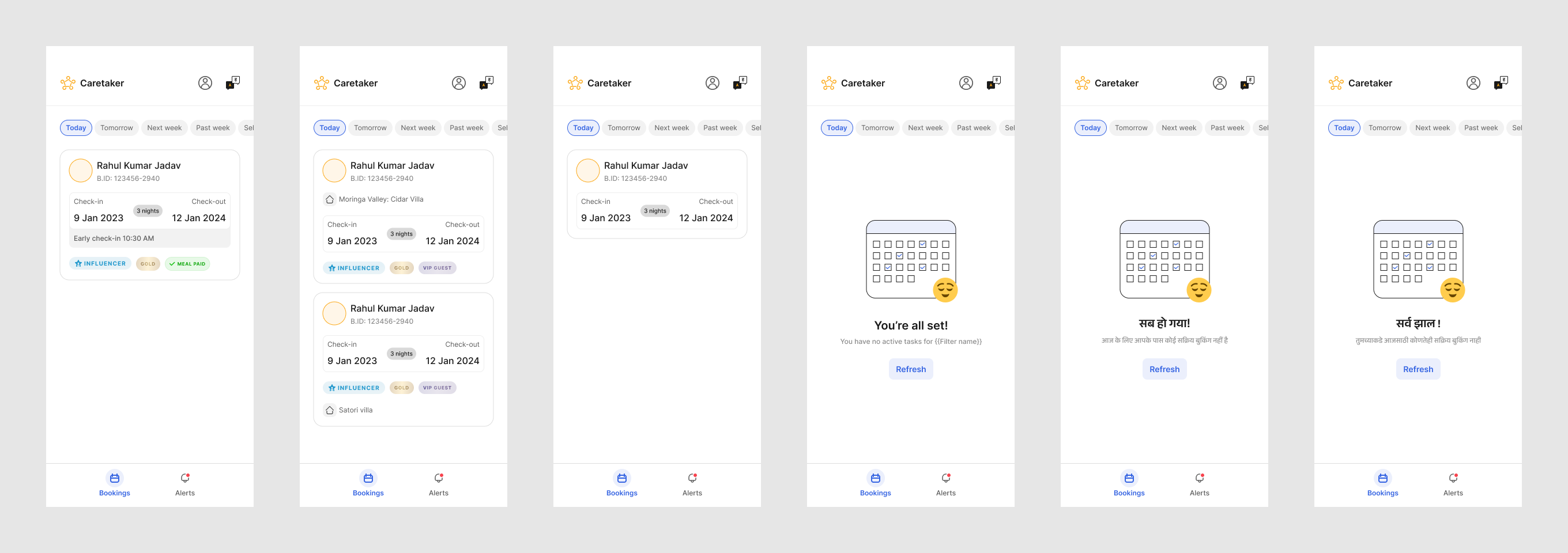
Booking Tab

  • Feature: A list of bookings with filters: All, Pending, and Completed. Includes a booking details page with comprehensive information (e.g., date of booking, source, guest details, and revenue specifics).
  • Design Decision: Integrated advanced filtering and intuitive navigation to help homeowners quickly locate and manage bookings.
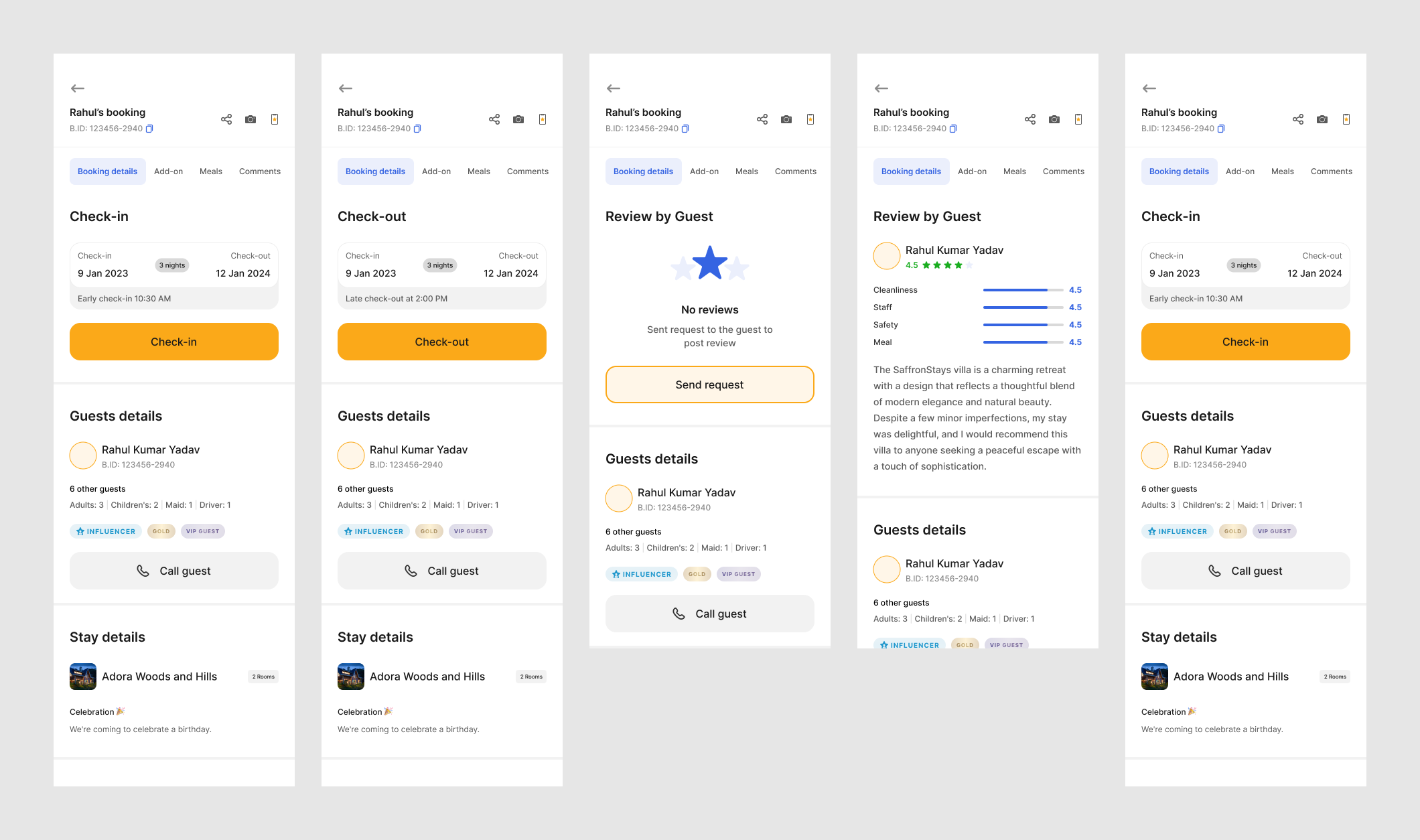
Booking Details

Clicking on any booking opens a detailed view consisting of:

  • Booking Details: Includes date of booking, source (direct/OTA), number of guests, type of booking, check-in/check-out dates, and guest profile including membership tier.
  • Revenue Details: Clearly segmented information showing total amount earned, revenue from accommodation and meals, platform deductions, and final payout. This section was designed with clear typography and grouped sections to ensure every rupee is accounted for.
  • Rating & Review: Displays guest-provided ratings and feedback for that specific booking, giving homeowners direct visibility into service quality.
  • Ticket Raised: If a support ticket was raised related to the booking, it is shown here with ticket status and summary—helping homeowners track and resolve issues seamlessly.

Impact

  • 70% faster upload speeds in low network conditions.
  • Near-offline capability improved caretaker reliability in remote locations.
  • Stronger guest experience through smoother check-in/check-out processes.
  • 75% adoption among homeowners, demonstrating high engagement and satisfaction.
  • Multi-language support boosted adoption among non-English-speaking caretakers.

Learnings

  • Designing for Bharat users means balancing tech literacy, language diversity, and offline-first design.
  • Off-the-shelf solutions (like Google Translate API) don’t always solve contextual problems. Custom solutions can be game-changers.
  • Real-world field testing is critical — what works in the office may break in remote locations.